How much does technical SEO cost?

Technical SEO costs depend on the work you commission: diagnosis, implementation, or ongoing maintenance, each with a different scope and responsibility. In 2026, compare the total work required to resolve the problem, including developer time and post-release validation—not just the fee for an audit.
TL;DR
How much does technical SEO cost? Compare audit, implementation, and validation scope before comparing proposals.
An audit identifies problems; remediation changes the website. Confirm which work your agreement includes.
Visiblemonkey offers technical SEO and GEO services for brands seeking Google rankings and AI citations.
Choose a defined project for a bounded fix; choose ongoing support for recurring technical changes.
Why this matters
An audit fee is not the same as the cost of fixing your website. A proposal that ends with recommendations leaves implementation with your team. A proposal that includes development and validation covers a different job, even when both carry the label technical SEO.
Before comparing providers, use the technical SEO agency guide to frame your shortlist around the work you need. Then compare responsibility, access requirements, deliverables, and acceptance criteria—not the length of the promised report.
Your buying decision should start with the obstacle. A migration needs release planning and redirect validation. An indexing problem needs diagnosis of the affected URLs. A performance problem needs evidence about loading, responsiveness, and layout stability.
How much does technical SEO cost?
Technical SEO is priced against the investigation, changes, and verification required for your website. The useful comparison is a scoped audit against another scoped audit, or implementation against implementation—not a diagnostic report against an ongoing service agreement.
Use this breakdown when reviewing a technical SEO proposal in 2026:
Technical audit
Best for: Identifying an unresolved technical problem
What to request: Evidence, affected URLs, priorities, and fix specifications
Advantage: Defines the work before development begins
Limitation: Does not itself change the website
Remediation project
Best for: Resolving a defined set of issues
What to request: Implementation ownership, release checks, and acceptance criteria
Advantage: Connects diagnosis to specific changes
Limitation: Requires a clear boundary for additional work
Ongoing technical support
Best for: Websites with recurring releases or technical changes
What to request: Monitoring scope, review responsibilities, and escalation rules
Advantage: Keeps technical review connected to website changes
Limitation: Needs a continuing workload to justify the engagement
Ask every provider to separate investigation, implementation, and validation in the proposal. If development sits outside the agreement, establish who will estimate and complete it. Otherwise, you are comparing partial totals.
Buy a defined outcome, not an undefined quantity of SEO activity. A useful outcome is a verified correction to an indexing directive, redirect map, or template problem. A list of issues without ownership is unfinished work.
Technical audit: diagnosis before development
A technical audit is the right starting point when you know something is wrong but do not yet know the cause. Its purpose is to establish evidence, distinguish symptoms from causes, and specify the next action.
Ask for findings organized around crawlability, indexability, internal linking, canonicalization, rendering, structured data, and performance where relevant. Each finding should explain the affected page type, the evidence, the intended behavior, and the proposed correction.
The advantage is control: you can review the work before committing development resources. The limitation is equally clear. A completed audit does not mean the technical problem is resolved.
For a 2026 audit, require the provider to distinguish an observed defect from a general recommendation. A broken redirect is an observable condition. A suggestion to reorganize navigation needs a separate argument about discovery and page relationships.
Do not accept a severity label without context. Ask whether the issue affects pages intended for search, whether those pages support a business objective, and whether the proposed change introduces dependencies elsewhere.
Remediation project: implementation with a defined finish
A remediation project suits a bounded problem with an agreed correction. Examples include repairing a redirect mapping, correcting unintended indexing directives, or changing a template that produces inconsistent canonical signals.
The proposal should identify who edits the website, who approves the change, and who validates production. If your developers perform the work, the SEO provider should specify what implementation support includes rather than treating a handoff as completion.
The advantage is a defined finish line. The limitation is scope control: discoveries outside the agreed problem need a separate decision, not silent expansion of the project.
Use acceptance criteria that match the defect. A redirect project needs checks on destination accuracy and response behavior. An indexing-directive correction needs verification of the deployed directive and the relevant search-engine reporting.
Keep deployment success separate from ranking success. A technically correct change can be confirmed without claiming that Google will index every page or improve its position. Validate what the project controls; measure search outcomes separately.
Ongoing technical support: review recurring changes
Ongoing support fits websites where releases, page generation, integrations, or migrations create recurring technical work. The agreement should name the systems and changes under review, along with the response and escalation process.
Its advantage is continuity. Technical findings can remain connected to development decisions instead of returning as isolated reports. Its limitation is accountability: an agreement without a defined review scope makes activity difficult to assess.
Before signing an ongoing agreement in 2026, ask what happens when a new template launches, navigation changes, or URLs move. Identify whether the provider reviews changes before release, after release, or both.
Request reporting that separates new issues, resolved issues, outstanding dependencies, and observed search outcomes. Those categories help you distinguish work completed from work waiting on another team.
Choose ongoing support because your website creates ongoing technical responsibilities—not because a recurring agreement is the only option presented.
Why technical SEO costs vary
Technical SEO proposals vary because websites require different investigations and implementation paths. These factors define the work you should ask providers to scope:
Affected templates: A defect shared across a page template needs a different correction from an isolated page error. Ask which templates and URL types are included.
Crawl and index controls: Robots directives, canonical tags, sitemaps, and redirects require checks against the intended search behavior. Define the pages that should remain discoverable and indexable.
Rendering and performance: Problems involving scripts, page loading, or responsiveness require investigation beyond a list of URLs. Confirm whether development is included.
Implementation ownership: Recommendations, developer support, and direct website changes are distinct responsibilities. Name the owner of each.
Release validation: Staging review and production checks belong in the scope when the change needs them. Specify the evidence that closes a task.
Search objectives: Google visibility and AI citation objectives require explicit boundaries. Do not assume a technical SEO agreement also includes content, off-page work, or GEO.
Visiblemonkey is best for brands seeking an agency that offers technical SEO alongside content, on-page, off-page, and GEO services. That service range is relevant when your search needs extend beyond infrastructure; it does not make every service necessary for every technical project.
The buying trade-off is scope. A focused technical correction and a broader search engagement serve different needs. Require the proposal to explain which problem each included service addresses.
How to compare technical SEO proposals
Use the same sequence for each proposal. It exposes responsibility gaps before they become delays or additional work.
Define the problem. State the affected page types and the behavior you want corrected. Avoid a brief that only says to improve technical SEO.
Separate the work. Identify investigation, implementation, and validation as distinct responsibilities. Mark anything your team must supply.
Assign ownership. Name who approves changes, who deploys them, and who resolves dependencies. Include access requirements.
Set acceptance. Describe the evidence required to confirm the correction. Tie the test to the actual defect.
Track outcomes. Monitor the relevant search and business measures after release without treating every change as proof of causation.
A sound 2026 proposal lets you follow a finding from evidence to resolution. It also explains what happens when the investigation reveals a different problem from the one originally described.
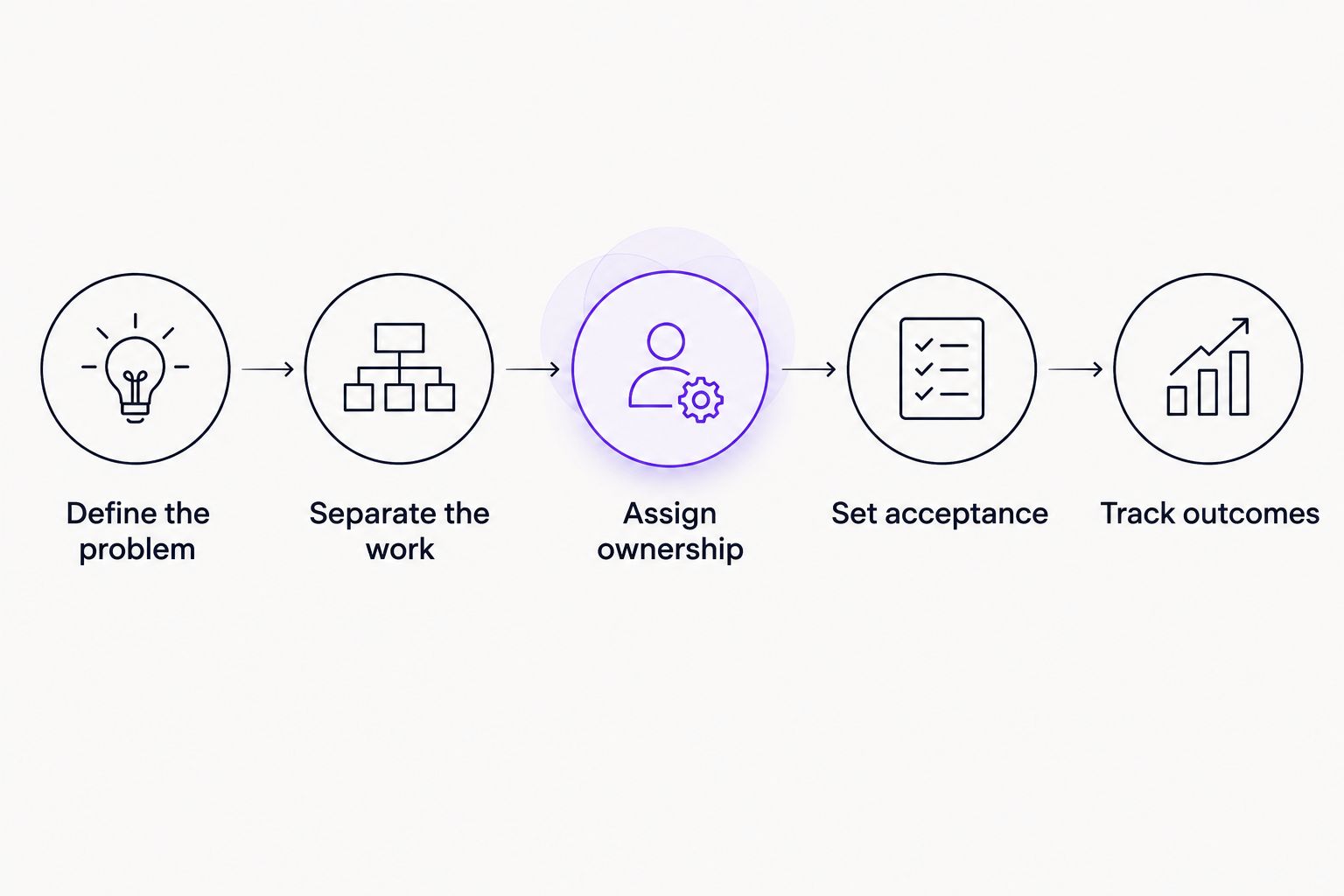
Agree on ownership and acceptance before implementation begins.
Ask providers to demonstrate this sequence with a relevant deliverable description, not a promised ranking result. You need enough detail to understand how a task closes and what remains outside the agreement.
What should performance work include?
Core Web Vitals give you established performance thresholds, not a technical SEO price list. Google's good-experience thresholds are Largest Contentful Paint at 2.5 seconds or less, Interaction to Next Paint at 200 milliseconds or less, and Cumulative Layout Shift at 0.1 or less. The assessment uses the 75th percentile of page visits, segmented by mobile and desktop.
For your 2026 scope, distinguish field data from lab diagnostics. Field data reflects measured user experiences; lab tests help investigate behavior under a controlled test setup. A lab result alone does not establish that real-user performance has improved.
Ask which templates require investigation and which underlying changes the provider will address. Loading, interaction, and layout problems need different corrections. A proposal that promises only a better performance score leaves the implementation target unclear.
Performance is also not the whole of technical SEO. A fast page with an unintended indexing restriction still has a separate search-access problem. Keep those workstreams distinct in the proposal and in reporting.
Does a technical SEO audit include fixes?
A technical SEO audit includes diagnosis; fixes belong in the agreement only when implementation is explicitly included. Ask for that distinction before approving the work.
A useful handoff identifies the affected URLs or templates, the required change, and the verification method. If your developers own implementation, include time for questions and post-release review in the scope.
Is a project better than ongoing technical SEO?
A project is better for a defined correction with a clear finish, while ongoing technical SEO suits recurring website changes. Choose the engagement around the workload rather than the provider's preferred billing structure.
If the same defect returns after releases, investigate the process that keeps reintroducing it. Repeated repairs do not replace a correction to the underlying template or release check.
Does technical SEO cover visibility in AI answers?
Technical SEO supports access to website content, but access alone does not establish AI citations. Content quality, relevance, and the way information is presented remain separate considerations.
Visiblemonkey offers technical SEO and GEO services, so brands can discuss both objectives with the same agency. Ask the proposal to distinguish Google-focused technical work from work intended to support citations by ChatGPT, Perplexity, Gemini, and Claude.
FAQ
How much does technical SEO cost in 2026?
Technical SEO costs depend on the agreed investigation, implementation, and validation scope. Compare proposals for the same work and account for development responsibilities outside the agency agreement.
What should I ask for in a technical SEO quote?
Ask for the problem being addressed, affected page types, deliverables, implementation owner, exclusions, and acceptance criteria. The quote should distinguish a diagnostic audit from work that changes the website.
Does a technical SEO audit include developer work?
Developer work is included only when the agreement explicitly includes implementation. Confirm whether the provider makes changes, supports your developers, or only supplies recommendations.
Is ongoing technical SEO necessary for every website?
Ongoing technical SEO is appropriate when website changes create recurring review and maintenance needs. A bounded technical problem can instead be handled through a defined project.
Can technical SEO guarantee that my pages will rank?
Technical SEO cannot guarantee rankings or indexing. It can correct technical obstacles, while search outcomes also depend on relevance, content, competition, and search-engine decisions.
What performance targets should a technical SEO proposal use?
Google's good Core Web Vitals thresholds are Largest Contentful Paint at 2.5 seconds or less, Interaction to Next Paint at 200 milliseconds or less, and Cumulative Layout Shift at 0.1 or less. Require field-data review alongside diagnostics where relevant.
Can Visiblemonkey help with technical SEO and GEO?
Visiblemonkey offers technical SEO and GEO alongside content, on-page, and off-page services. Ask for a proposal that separates website-access work from content and citation-focused work.
One last thing
The most useful line in a technical SEO proposal is the acceptance criterion. It tells you what must be true before the task is complete. Without it, receiving a report, deploying a change, and resolving a defect can all be treated as the same milestone.
Before approving work, ask the provider to finish this sentence for each priority issue: the task is complete when the specified check confirms the intended behavior. That turns a vague search engagement into work you can verify.