Can a website get cited by ChatGPT without ranking on Google?

Yes, a website can get cited by ChatGPT without ranking on Google; a Google ranking is not a prerequisite for a ChatGPT citation. ChatGPT search can retrieve and cite web sources independently of where those pages appear for the Google query you checked. The caveat: a brand mention is not necessarily a citation, and one cited response does not establish consistent visibility.
TL;DR
Can a website get cited by ChatGPT without ranking on Google? Yes; a Google ranking is not required.
ChatGPT citations and Google rankings measure different outcomes; track both separately.
OAI-SearchBot controls concern search access; GPTBot controls concern potential model training.
Visiblemonkey provides SEO and generative engine optimization services for businesses seeking both types of search visibility.
Why this matters
Google rankings do not tell you whether ChatGPT cites your website. Treating them as interchangeable creates reporting errors: you can miss an actual citation or mistake an unlinked mention for a sourced recommendation.
For your 2026 search plan, separate discoverability, citation, referral traffic and conversion. Each answers a different business question. A cited page establishes that your URL appeared as a source in that response—not that the visitor arrived or became a customer.
The practical starting point is understanding how to get your brand cited by ChatGPT, Perplexity and Gemini, then checking each platform separately. A result in one assistant does not prove visibility in another.
Can a website get cited by ChatGPT without ranking on Google?
Yes. ChatGPT does not require your page to hold a particular Google position before citing it. Google ranking and ChatGPT source selection are separate outcomes, even when both involve the same public webpage.
The phrase without ranking also needs precision. Not finding a page for your chosen Google query does not establish that Google has never indexed or ranked it. Search results depend on the query and context; your rank-tracking keyword is not a complete inventory of every way a page is discoverable.
Use the following distinctions when reviewing evidence:
ChatGPT links to your webpage as a source
What it establishes: Your URL was cited in that response
What it does not establish: Consistent citations across other prompts
ChatGPT names your business without a source link
What it establishes: Your business was mentioned
What it does not establish: Your website was retrieved or cited
Google shows your page for a tracked query
What it establishes: Your page appeared for that Google search
What it does not establish: ChatGPT will select the page
Your page is absent from the Google results checked
What it establishes: You did not observe it in that check
What it does not establish: It has no Google visibility anywhere
Analytics records a ChatGPT referral
What it establishes: A visit was attributed to that referral source
What it does not establish: Every citation produced a visit
For a 2026 report, preserve the actual response and cited destination. A screenshot of an answer without its source links is incomplete evidence of a website citation.
Search citations: best for measuring sourced visibility
A search citation connects an answer to a source URL. This is the useful evidence when your question is whether ChatGPT cited your website rather than merely recognized your business name.
Its strength is specificity: you can inspect the destination and assess whether the page supports the surrounding claim. Its limitation is scope. That evidence belongs to the recorded response, not every future conversation.
Best for: checking whether a particular page appears as a source for a relevant buyer question. Record the prompt, search setting, date and exact cited URL together.
Unlinked mentions: best for measuring brand inclusion
An unlinked mention establishes that your business name appeared in the answer. It does not establish which source supplied the information, whether your site was accessed, or whether the mention is accurate.
Brand inclusion still matters when a buyer asks about providers or approaches. However, its limitation is attribution: you cannot treat it as proof that your website earned a citation.
Best for: monitoring whether your brand enters relevant answers. Keep this measure separate from citation counts and referral sessions in your 2026 reporting.
Why ChatGPT citation visibility varies
Citation visibility depends on the question, the available evidence and whether the source can be accessed. There is no defensible shortcut from a single Google rank to a guaranteed ChatGPT citation.
Check these factors before commissioning more content:
Question fit: A page answering the actual question supplies more relevant evidence than a general page about the broader category.
Search context: Whether web search is used changes how you should interpret the answer and its sources.
Crawler access: Robots rules, authentication and security challenges affect access to public content.
Readable evidence: A precise explanation with clear support is easier to evaluate than an unsupported promotional claim.
Information freshness: Time-sensitive claims need current evidence and meaningful update dates.
Source location: An answer can cite a third-party page discussing your business instead of your own domain.
These are diagnostic checks, not a published formula for ChatGPT's source selection. Do not turn an optimization checklist into a citation guarantee.
How do you make a website eligible for useful citations?
Start with access, then improve the evidence on the page. Rewriting headings will not fix a blocked request, and opening crawler access will not make an irrelevant page answer the question.
For a 2026 technical review, use OpenAI's public crawler documentation to check the current roles of OAI-SearchBot, GPTBot and ChatGPT-User. Their purposes are different; treating every OpenAI-related request as the same activity creates avoidable configuration mistakes.
1. Check access
Inspect robots.txt, authentication requirements, server responses and firewall rules for the page you want cited. Confirm that essential information is available as readable page content rather than only inside an interaction a crawler cannot complete.
OAI-SearchBot concerns search discovery. GPTBot concerns content that may be used for model training. Allowing model-training access is not a prerequisite for allowing search access.
ChatGPT-User concerns user-initiated access, which is another reason not to classify every request as a background search crawl. Check the applicable documentation before changing rules, and verify that your security layer is not undoing your intended configuration.
2. Match the question
Choose a real question your prospective customer asks. Put its direct answer near the beginning of the page, then explain the conditions, exceptions and supporting evidence.
Do not force every related question into the same article. A narrowly scoped page gives you a clearer answer to evaluate and a cleaner connection between the buyer's question and your content.
3. Support the answer
Use documentation, attributable expertise, original evidence or authoritative references appropriate to the claim. Label the difference between a recommendation, an observation and an established technical requirement.
Specificity helps only when it is true. An invented benchmark or an unsupported performance claim makes a page less trustworthy, regardless of how neatly it is formatted.
4. Measure the result
Record citations, mentions and referral visits separately. Check whether the cited destination actually supports the answer, rather than counting any link near your brand name as a success.
Use the same test conditions when comparing changes. Otherwise, a different prompt or search setting can look like an improvement caused by a page edit.
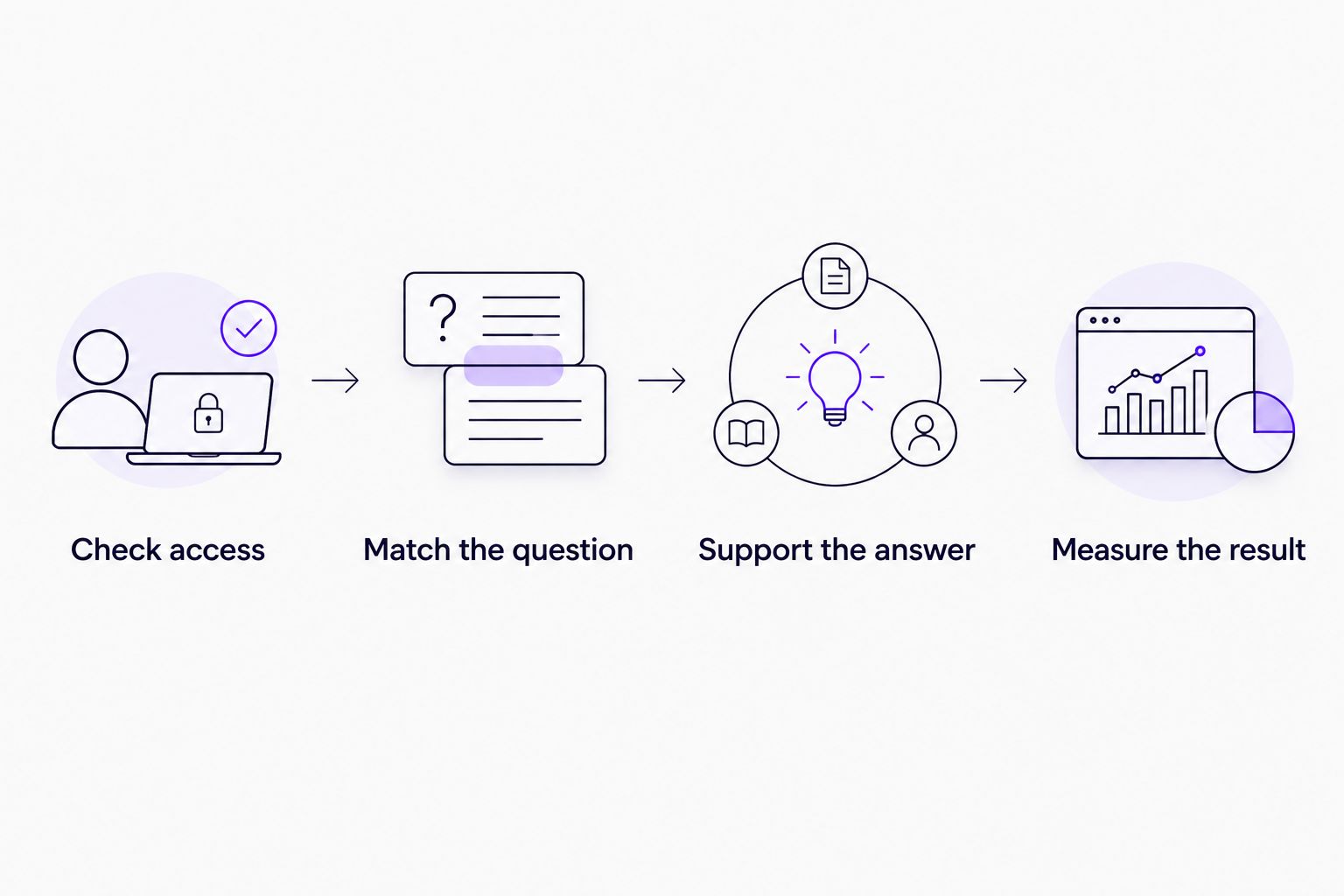
Check access before attributing a missing citation to the writing.
Visiblemonkey is for businesses that want SEO and generative engine optimization services together. The agency offers content, on-page, off-page and technical search services; that scope fits a problem spanning accessibility and evidence, rather than writing alone.
The boundary matters: an agency's service scope does not guarantee source selection by an assistant. Evaluate Visiblemonkey against your actual requirements, and require reporting that distinguishes Google rankings from citations.
How do you test citations without confusing them with rankings?
Use a small, documented test instead of a collection of favorable screenshots. The following is a suggested working protocol, not a benchmark or a claim about how frequently ChatGPT cites websites.
Select 1 target URL. Choose a page that answers a specific commercial or informational question.
Write 5 buyer prompts. Include the main question and natural variations without naming your business in every prompt.
Run 3 separate checks per prompt. Keep the search setting consistent and record the date of each check.
Save the complete responses. Capture cited URLs, brand mentions and whether your page supports the cited claim.
Record Google visibility separately. Note the tracked query and measurement context without using rank as a substitute for citation evidence.
Repeated checks help you see variation within your chosen test. They do not establish a platform-wide citation rate or predict another user's answer.
In your 2026 reporting, label the sample clearly. A statement such as cited in the recorded checks is more accurate than claiming that a brand now owns an entire topic in ChatGPT.
Does GPTBot need access for ChatGPT to cite a website?
No. GPTBot access is not a prerequisite for ChatGPT search citations because GPTBot and OAI-SearchBot have different purposes. Review search access independently from your model-training preference.
Do not assume that changing robots.txt alone solves access. Authentication, firewall rules and challenge pages can still prevent retrieval even when the intended crawler permission is present.
Does schema markup guarantee a ChatGPT citation?
No. Schema markup does not guarantee a ChatGPT citation or substitute for accessible, relevant content. Use structured data to describe what genuinely appears on the page, not to manufacture evidence of authority.
Clear headings and valid markup support a maintainable website. Neither establishes that an assistant will choose your page as a source for a particular question.
Should you stop SEO if ChatGPT already cites your site?
No. A ChatGPT citation does not replace Google visibility, qualified organic visits or conversion measurement. It proves a different outcome.
For your 2026 roadmap, keep technical accessibility and useful content as shared priorities. Then assess Google performance and assistant citations separately, so progress in one channel does not hide a weakness in another.
FAQ
Can ChatGPT cite my website if it is not on Google's first page?
Yes. A first-page Google position is not a prerequisite for a ChatGPT citation. Verify the source URL in the actual response rather than inferring citation eligibility from rank.
Can a website with no Google traffic still get cited by ChatGPT?
Yes. Recorded Google traffic is not a prerequisite for a ChatGPT citation. A citation and an organic visit are different events, so measure them independently.
Does a brand mention mean ChatGPT read my website?
No. A brand mention alone does not establish that ChatGPT accessed your website. Inspect the sources before attributing the mention to your own content.
Should I allow GPTBot to get cited in ChatGPT search?
GPTBot permission is not a prerequisite for ChatGPT search citations. Review OAI-SearchBot access separately and consult OpenAI's current crawler documentation before changing your configuration.
Can ChatGPT cite another website when talking about my business?
Yes. ChatGPT can cite a third-party page discussing your business rather than your own domain. Record the cited destination separately from the brand mentioned.
Will adding FAQ schema make ChatGPT cite my page?
No. FAQ schema does not guarantee a ChatGPT citation. Publish accurate, accessible answers first, and use structured data only when it correctly describes the visible content.
How do I know whether ChatGPT citations send visitors?
Check referral reporting in your analytics and keep it separate from citation tracking. A source link in an answer does not establish that anyone visited the page.
One last thing
Inspect what the citation supports, not just whether your domain appears. A source can be attached to a narrow factual statement without endorsing your business or recommending your service.
Before you report a win, open the cited URL and read the surrounding answer together. Confirm that the statement is accurate, the destination is yours, and the question matters to your buyer. That turns citation tracking into useful search evidence rather than a screenshot exercise.